1Bit AI vs Canva for Image Combining
Compare creative control, image blending, multi-image fusion, and workflow speed for visual projects.
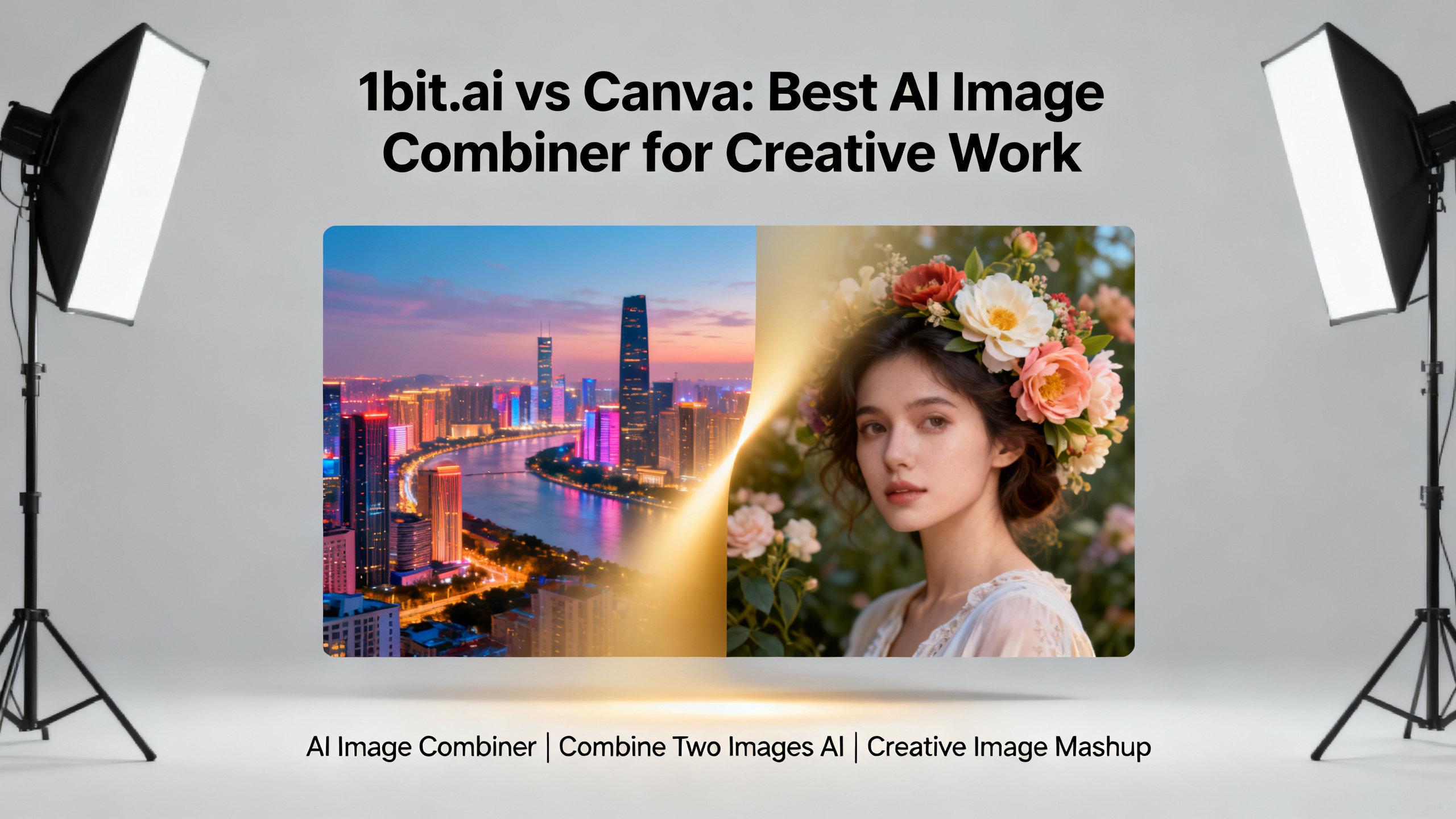
1bit.ai vs Canva: Which AI Image Combine Is Better for Creative Workflows
Choosing the right AI image combiner can transform how you create marketing visuals, artistic compositions, and family memories. This comprehensive comparison analyzes 1bit AI Image Combine and Canva's AI tools to determine which platform delivers superior results for blending multiple images, text prompts, and creative concepts. Whether you're a marketer building campaign assets, an artist exploring digital mashups, or a parent creating imaginative scenes, you'll discover which tool offers better control, quality, and workflow efficiency. We'll examine core capabilities, pricing, ease of use, and real-world applications to help you make an informed decision about which AI image combiner deserves your creative time.
Combine Images With AI New users get free credits to try it.Quick answer
For dedicated AI image fusion with precise control over multiple inputs, 1bit AI Image Combine outperforms Canva's general-purpose design tools. While Canva offers familiar templates, 1bit.ai specializes in blending images with text prompts for truly unique compositions, supports more simultaneous inputs, and provides finer artistic control—making it the superior choice for serious creative workflows.
- 1bit.ai excels at complex image fusion AI with multiple image and text inputs simultaneously
- Canva works better for quick social media graphics using their template ecosystem
- Creative control is significantly deeper in 1bit.ai with detailed prompt engineering
- Output quality for artistic mashups is higher in 1bit.ai's specialized AI models
- Workflow speed for complex compositions favors 1bit.ai's dedicated interface
- Commercial usage is clearer with 1bit.ai's straightforward licensing
- Beginner accessibility is strong in both, but Canva has more hand-holding
Table of contents
- Core Capabilities: What Each AI Image Combine Actually Does
- Step-by-Step Tutorial: Creating a Marketing Visual with Both Tools
- Feature Comparison: 1bit.ai vs Canva for Image Fusion AI
- Creative Workflows: Which Tool Fits Your Specific Needs?
- Common Mistakes & Troubleshooting for AI Image Blending
- FAQ
Core Capabilities: What Each AI Image Combine Actually Does
Understanding the fundamental differences between these platforms is crucial for selecting the right AI image combiner. 1bit AI Image Combine is a specialized tool built exclusively for blending multiple images and text prompts into cohesive compositions using advanced diffusion models. It treats each input as a distinct element that can be weighted, positioned, and stylized independently within the final output. This allows for sophisticated creative image mashups where a product photo, background scene, and textual concept can merge seamlessly.
Canva, in contrast, approaches AI image combination through its Magic Studio suite—primarily via "Magic Media" and "Magic Edit" features. These tools are designed to work within Canva's broader design ecosystem, focusing on quick enhancements rather than deep fusion. While you can generate images from text or modify existing ones, true multi-image blending with precise control is limited. The platform excels at applying AI within templates but struggles with custom compositions requiring nuanced image fusion AI.
The distinction becomes clear when attempting complex projects. With 1bit.ai, you can upload three separate images—a person, a landscape, and an object—plus a text prompt like "cyberpunk marketplace at dusk," and the AI will intelligently blend all elements while respecting their relationships. Canva would require you to manually layer these elements and use AI tools piecemeal, resulting in less cohesive integration. This fundamental architectural difference makes 1bit.ai the superior AI photo blend tool for ambitious creative work.
Use 1bit AI Image Combine when you want a faster workflow
For marketers creating campaign visuals that need to blend product shots with conceptual backgrounds and brand messaging, 1bit.ai's unified interface eliminates the back-and-forth between multiple tools. Upload your assets, describe your vision, and get a polished composition in one step. This streamlined approach saves hours compared to Canva's fragmented AI tools. New users get free credits to experience this efficient workflow firsthand.
Combine Images With AIStep-by-Step Tutorial: Creating a Marketing Visual with Both Tools
Let's walk through creating a promotional image for an eco-friendly water bottle company to demonstrate the workflow differences. Our goal: combine a product photo, nature background, and sustainability messaging into one compelling visual. This practical example shows how each AI image combiner handles real creative challenges.
Using 1bit AI Image Combine (5 Steps)
- Upload Multiple Assets: Drag and drop your product shot, forest background image, and optional logo file. The interface clearly shows each upload slot with preview thumbnails.
- Craft Your Prompt: Enter "A sleek metallic water bottle sitting on a mossy log in a sun-dappled forest, morning light, photorealistic, sustainability theme" in the text prompt field.
- Adjust Parameters: Set image strength to 70% for the product, 60% for the background, and choose "Photorealistic" from the style presets. Use the aspect ratio selector for Instagram Square (1:1).
- Generate Variations: Click "Generate" and review 4 initial options. Use the seed lock to create subtle variations of your favorite composition.
- Refine and Export: Select the best output, upscale to 4K resolution, and download with commercial license automatically included. Total time: 3-4 minutes.
Using Canva's AI Tools (7+ Steps)
- Start with Template: Search for "product promotion" templates and select one that roughly matches your needs.
- Upload Product Image: Replace template placeholder with your water bottle photo using drag-and-drop.
- Generate Background: Use Magic Media to create "sun-dappled forest" background via text-to-image, then manually position behind product.
- Blend Manually: Adjust layers, apply blur effects, and use blending modes to integrate elements—this requires design skills.
- Add Text Separately: Insert sustainability messaging as text boxes, choosing fonts that match brand guidelines.
- Apply AI Enhancements: Use Magic Edit to adjust lighting or Magic Expand to modify composition if elements don't fit.
- Export with Limitations: Download but note Canva's licensing restrictions for commercial use of AI-generated elements. Total time: 10-15 minutes.
The tutorial reveals 1bit.ai's efficiency advantage: unified generation versus Canva's piecemeal approach. While Canva offers more manual control for designers comfortable with layers, 1bit.ai delivers cohesive results faster through intelligent AI blending. This makes 1bit.ai particularly valuable for teams producing high volumes of marketing visuals or artists exploring multiple compositional ideas rapidly.
Feature Comparison: 1bit.ai vs Canva for Image Fusion AI
This detailed comparison table helps you evaluate which AI image combiner matches your specific requirements for creative image mashup projects. We've tested both platforms across critical dimensions that affect real-world creative workflows.
Feature Category 1bit AI Image Combine Canva (Magic Studio) Maximum Images per Blend 4+ images simultaneously Primarily 1 image with AI + manual layering Text Prompt Integration Direct blending with images in single prompt Separate text-to-image generation only Style Control 10+ dedicated style presets + custom guidance Limited style keywords in Magic Media Output Resolution Up to 4K with upscaling Standard HD (1080p) for AI elements Commercial Licensing Clear commercial rights included Complex terms for AI-generated content Beginner Learning Curve Moderate (specialized interface) Easy (familiar template system) Advanced Controls Seed control, weight adjustments, negative prompts Very limited fine-tuning options Workflow Integration Standalone web app Integrated design suite Free Tier Value Generous free credits for testing Limited Magic Media credits monthly Best For Complex blends, artistic projects, marketing visuals Quick social graphics, template-based designsThe comparison reveals 1bit.ai's specialization advantage for serious AI image combination work. While Canva wins on beginner accessibility and template variety, 1bit.ai dominates where it matters most for creators: simultaneous multi-image processing, prompt precision, output quality, and commercial usability. This makes 1bit.ai the better AI image merger for professionals who need reliable, high-quality blends rather than quick social media drafts.
Creative Workflows: Which Tool Fits Your Specific Needs?
Different creative professionals require different capabilities from their AI image combiner. Understanding which platform aligns with your specific workflow prevents frustration and maximizes productivity. Here's how each tool serves distinct creative communities seeking to blend images with AI effectively.
For Digital Artists & Illustrators: 1bit.ai provides the control needed for conceptual art. The ability to combine reference images with stylistic prompts enables artists to explore visual ideas rapidly. For instance, blending Renaissance portrait references with "steampunk machinery" and "digital glitch effects" creates unique hybrid styles. Canva's AI tools lack this nuanced control, making them better for artists who work within established styles rather than pioneering new ones.
For Marketing Teams: Efficiency and brand consistency determine tool choice. 1bit.ai excels at producing campaign visuals where product photos must integrate with conceptual backgrounds and messaging. The platform's batch generation capabilities allow creating multiple variations for A/B testing. Canva works better for social media managers who need to adapt existing brand templates quickly but struggle with truly original compositions requiring deep image fusion AI.
For Content Creators & Educators: Visual storytelling benefits from both platforms differently. 1bit.ai creates compelling thumbnail images by blending episode screenshots with thematic elements. Canva efficiently adds text and graphics to those thumbnails. The ideal workflow often involves using 1bit.ai for the core creative image mashup, then importing to Canva for final polish—if you can manage two subscriptions.
Mistake #1: Overloading with Contradictory Elements
Problem: Uploading images with conflicting styles (e.g., cartoon character + photorealistic background) without proper prompting leads to jarring results.
Solution: Use style-consistent source images or add explicit style guidance like "render all elements in watercolor style." In 1bit.ai, adjust individual image strength sliders to balance influence.
Mistake #2: Ignoring Aspect Ratio Planning
Problem: Creating square compositions when you need landscape banners, requiring awkward cropping later.
Solution: Always set your target aspect ratio before generation. 1bit.ai offers specific presets for social media platforms, while Canva requires template selection upfront.
Mistake #3: Underutilizing Negative Prompts
Problem: Getting unwanted elements like extra fingers in human blends or distorted text.
Solution: Use negative prompts like "extra limbs, distorted text, blurry" to guide the AI away from common artifacts. 1bit.ai has dedicated negative prompt fields, while Canva lacks this control entirely.
Mistake #4: Skipping the Preview & Iteration Phase
Problem: Settling for first results instead of refining through iteration.
Solution: Generate 4-8 variations initially, select the most promising, then use seed locking to create subtle improvements. This workflow is streamlined in 1bit.ai but manual in Canva.
Professional creators develop checklists to avoid these mistakes. Before any AI image combination: 1) Audit source images for consistency, 2) Define target dimensions and platform, 3) Craft detailed positive and negative prompts, 4) Plan for 3 iteration cycles minimum. Following this discipline dramatically improves outcomes with any AI photo blend tool.
Practical demo visual for this tutorial workflow.FAQ
What is the best AI image combiner for complex artistic projects?
For complex artistic work requiring blending of multiple reference images with nuanced stylistic prompts, 1bit AI Image Combine is superior. Its dedicated interface allows simultaneous processing of up to four images with individual strength controls, detailed style presets, and negative prompting—features Canva's general-purpose design tools lack. Artists report better cohesion and creative control when using 1bit.ai for serious digital art projects versus Canva's template-focused approach.
How does 1bit.ai compare to Canva for image fusion in marketing workflows?
1bit.ai accelerates marketing visual creation by blending product shots, backgrounds, and concepts in one step, while Canva requires manual layering of separately generated elements. For example, creating a product-in-scene advertisement takes 3-4 minutes in 1bit.ai versus 10-15 in Canva. However, Canva offers better post-generation editing within their design suite. Marketing teams often use 1bit.ai for core image fusion, then import to Canva for final text and graphic additions when both tools are available.
Can I combine more than two images with AI in either platform?
Yes, but capabilities differ significantly. 1bit AI Image Combine supports uploading and intelligently blending up to four images simultaneously with text prompts, treating each as a distinct element with adjustable influence. Canva technically allows multiple image uploads but processes them separately through Magic Media or requires manual composition. For true multi-image AI fusion rather than manual collage, 1bit.ai is currently the more capable solution for combining three or more images cohesively.
Is there a free AI tool to blend images for commercial use?
1bit.ai offers free credits to new users with clear commercial licensing terms for generated images, making it suitable for commercial projects. Canva's free tier includes limited Magic Media credits but has complex licensing terms for AI-generated content that may restrict commercial use. For professional work, 1bit.ai's straightforward commercial license provides more security. Always review current terms, but 1bit.ai generally offers better commercial rights clarity for blended images compared to Canva's evolving AI policies.
Which AI image combiner is easier for complete beginners?
Canva is easier for absolute beginners due to its familiar template system and guided design interface. However, 1bit.ai offers a more intuitive experience for the specific task of image blending, with clear upload slots and prompt fields. Beginners seeking quick social graphics prefer Canva's templates, while those focused specifically on image fusion find 1bit.ai's specialized interface more straightforward once they move past initial template dependence. Both offer learning resources, but Canva has more extensive beginner tutorials.
How do AI image combiners work for creative projects versus manual editing?
AI combiners like 1bit.ai use diffusion models to understand and merge image contents semantically, creating cohesive blends that would require hours of manual Photoshop work. Unlike manual editing where elements are simply layered, AI analyzes relationships between objects, lighting, and perspectives to generate realistic integrations. This enables creative possibilities beyond manual techniques, such as blending a modern building with ancient architecture while maintaining structural integrity—something extremely difficult manually but achievable with advanced image fusion AI.
Conclusion
Choosing between 1bit AI Image Combine and Canva's AI tools depends on your creative priorities. For specialized, high-quality image fusion AI with multi-input blending and detailed control, 1bit.ai is the superior AI image combiner. Its dedicated approach delivers better results for artistic projects, marketing visuals, and complex compositions. Canva remains excellent for quick social graphics within its template ecosystem but lacks the depth for serious image blending work. As AI image combination becomes essential for modern creative workflows, investing in the right tool saves time and elevates quality. For those ready to move beyond basic templates into truly innovative visual creation, 1bit.ai offers the capabilities and control that professional creators need.
Combine Images With AI New users get free credits to try it.